


Start with the Frame, Not the Shine
The first thing most of us notice at a market stall is the surface — a rich glow, a bit of brass, a pretty piece of inlay. But the surface is the easiest thing to fake and the cheapest thing to fix. Walk round a piece before you touch it. Sight along the length of a table top or down the stiles of a chair: if the line runs true, the timber has not twisted through decades of central heating. Press a hand on one corner and give a gentle push. A sound carcase moves as one piece; a tired one creaks and shifts. Bring a small torch and look at the underside and the back, where makers rarely bothered to hide anything.
Joints: Where Craft Shows Its Hand
Turn a chair or small chest upside down if the seller will let you, and look at the corners. On drawers and carcases you want to find a dovetail — the interlocking, fan-shaped joint that has held good furniture together for centuries.
- Hand-cut dovetails are slightly irregular. The pins vary in width, the spacing is uneven, and faint saw marks remain. That usually means a pre-1900 piece, or a good later copy.
- Machine-cut dovetails are perfectly uniform, often with a fine wavy line from a router. Not a fault in itself, but it dates the piece and should be reflected in the price.
- Nails, screws or a smear of modern white glue in a corner where a joint should be tells you someone has been in there recently. Sometimes that is fine; sometimes it hides a split.
Chairs deserve their own test. Sit on one properly, then rock gently side to side. A chair that moves under you has loose joints, and loose joints in a chair are the start of a long, expensive relationship. Look for old splits running up the back legs.
Drawer Runners and the Feel of a Drawer
Pull every drawer right out and set it aside. You are looking at three things.
First, the runners — the strips the drawer slides on. On good furniture these are solid timber, worn into a smooth, slightly hollowed track where a century of hands have pulled. That wear is a good sign: it means the runner has not been swapped for a cheap strip of softwood.
Second, the dust boards between drawers. Their presence shows a maker who thought about how the piece would live.
Third, the drawer itself. Push it back in. It should slide with soft, even resistance and close flush with the carcase. A drawer that jams, drops at the front or needs a shoulder to close has swollen with damp, warped, or lost its runner.
Reading the Grain
Timber tells you its age through its grain. On a solid mahogany or walnut drawer front, look for a continuous pattern that carries through from face to edge. Where the grain stops dead, or a sharp line runs around the perimeter, the piece is veneered — a thin sheet of fine timber laid over something plainer.
Veneer is not a sign of poor quality; Georgian cabinetmakers used it beautifully. Condition is what matters. Run a fingernail along the edges and tap lightly across the surface. A dull thud instead of a crisp tap means the glue has failed and the veneer has lifted. A patch a few centimetres across can be re-glued with a warm iron and a little hide glue. Crumbling loss along a curve is a specialist's job.
Then look for woodworm: small round flight holes, roughly 1–2 mm across, often in clusters, with fine dust beneath. Old, dead holes in dry oak are common and can be left alone. Fresh dust, or holes in a piece that smells damp, means walk away.
Repairs Worth Doing, Repairs to Avoid
Half the pleasure of a vintage piece is bringing it back yourself. These are jobs a careful amateur can do well.
- Regluing a loose joint. Clean out the old glue, warm the joint, use hide glue, clamp it and leave it overnight. Hide glue is reversible, which matters to the next owner.
- Tightening handles, hinges and escutcheons. Often the screws have simply worked loose. Fill a worn hole with a sliver of wood and a dab of glue, then re-drive.
- Feeding dry timber. A thin coat of beeswax and turpentine, or a little linseed oil on bare wood, lifts a dull surface without hiding the patina.
- Lifting a water ring. A rub with fine pumice and oil, worked with the grain, often shifts a white mark from a French-polished top.
Walk away from warped tops, cracked structural rails, missing legs and active infestation. Not impossible, but not a weekend's work, and rarely worth the money on a piece you paid £30 for.
Living With It — and Lighting It
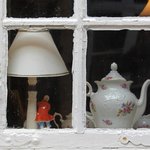
Once a piece is home, give it a spot where it can be seen properly. Old timber and old finishes were made to be read by warm light. A 2700K bulb flatters mahogany, oak and walnut in a way a cold daylight bulb never will. Put a small lamp on the chest rather than overhead spots, and let the light graze across the surface — that raking light shows you the grain and the marks of use you fell in love with at the stall.
Keep it out of direct sun and away from radiators, then use it. Set your tea down, open the drawers, let the runners wear a little smoother. That slow accumulation of small marks is what turns a market find into a piece worth keeping.





John Doe
14 January, 2022Having no content in post should have adverse..
Chauffina Carr
10 April, 2022We use these tests all time! Killer stuff!
Jim Séchen
16 July, 2022Thanks for all the comments, everyone!