


Why Texture Matters More Than Colour in a Small Sitting Room
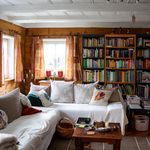
A cottage sitting room rarely gives you space to spare, and that changes how you should decorate it. The instinct is to add more colour, more pattern, more things — and the room quietly closes in around you. Texture works differently. It gives a compact room depth without demanding extra floor space, because it plays with light rather than competing for attention. A wool throw over the arm of a chair, a linen shade over a low lamp, a waxed oak table worn pale at the edges: none of these take up room, yet each one gives lamplight something to catch and soften.
The practical approach is to layer by weight and by finish rather than by pattern. Think of the room in three bands — the surfaces you walk on, the surfaces you sit against, and the soft things you reach for. Add one new texture to each band and you have a room that feels warmer without feeling busier. Try to keep to three dominant textures in any one eyeline; beyond that, the eye stops resting and starts working.
Begin With Aged Wood as Your Base Note
Before you buy a single cushion, look at the wood in the room. Old timber is the quiet backbone of a cottage interior, and it does something no fabric can: it grounds the scheme and stops soft furnishings from floating. The finish matters more than the species. Waxed or oiled wood has a low, honeyed sheen that absorbs light gently, whereas a high-gloss varnish bounces it back and can make a small room feel hard. If a piece has been over-varnished, a gentle rub back with fine wire wool and a coat of clear wax will transform it in an afternoon.
- Keep one dominant wood tone across the main pieces so the eye reads calm, then allow a single darker or paler piece as a contrast — a stripped pine stool beside an oak dresser works beautifully.
- Choose pieces with visible grain and a little honest wear. A scrubbed kitchen table, a blanket box with softened corners, a ladder-back chair with a rubbed arm: the marks are the texture.
- Use a wooden stool or small chest as a side table instead of a new MDF unit. It costs less, ages better and holds a lamp at exactly the right height.
Matte surfaces hold shadow, and shadow is what makes a room feel deep rather than flat. That is the whole principle in one sentence.
Wool: Weight, Warmth and Quiet
Wool is the workhorse of a cosy sitting room, and it earns its place by being heavy enough to stay put and dense enough to deaden sound. In a small room, that acoustic softness matters as much as the warmth — a space with hard floors and bare walls echoes, and echoing rooms never feel truly restful.
- The rug. A pure wool rug in a low pile of around 4–6mm is ideal over floorboards, and it can be layered directly over a seagrass or jute base for extra depth. Allow the rug to extend at least 60cm beyond the front of the sofa so your feet land on wool when you stand.
- The throws. One per seat, folded rather than spread flat. A folded throw reads as texture; a spread one reads as mess. Keep them in undyed oatmeal, bracken, soft grey or a single muted madder red.
- The cushions. Build in two layers — a 45cm wool or tweed cushion at the back of the sofa, a 30cm linen one in front of it. The size difference is what makes the arrangement look considered rather than piled.
Linen and Cotton to Lighten the Mix
Wool alone will make a compact room feel solemn. Linen is the antidote: its slubby weave catches light across the surface and lifts the whole scheme without introducing a single bright colour. Washed linen slipcovers over a tired armchair are the single most effective change you can make in an afternoon, and they soften the bulk of a large piece of furniture in a small room.
At the window, unlined linen curtains hung from a simple wooden or iron pole let daylight filter through the cloth, so the window still reads as a source of light rather than a blackout panel. Keep the proportions in mind: roughly two soft, light textures for every heavy one. So a wool rug, a wool throw and a tweed cushion might be balanced by linen curtains, a cotton lampshade, linen slipcovers and a couple of fine cotton napkins folded on a tray.
Light the Textures, Don't Flood the Room
Texture is only visible when light grazes across it, which is why overhead lighting so often ruins a carefully layered room. A single bright ceiling fitting flattens every surface and reveals every flaw.
- Use warm bulbs around 2200–2700K. Cool white light turns wool grey and makes aged wood look tired.
- Place lamps at different heights — a table lamp at roughly 60–70cm, a floor lamp lower, a candle or two at hearth level. Three small pools of light beat one big wash.
- Choose shades in linen, pleated paper or aged brass, which diffuse light through the material instead of directing it. A shade that glows is doing half the work for you.
- Fit dimmers wherever you can, and switch the ceiling light off after dark as a matter of habit.
Slow Living: Edit, Then Let the Room Age
Slow living isn't a style so much as a pace. Resist finishing the room in a weekend. Live with each layer for a few weeks before you add the next one, and you will avoid the clutter that comes from buying everything at once. Rotate your wool throws with the seasons, air cushions and blankets on a dry day, and let linen crease — it is meant to.
Follow one rule above all others: one thing in, one thing out. A cottage sitting room stays calm not because it is empty but because everything in it has been chosen slowly and kept deliberately. Do that, and the room will only get better as it ages.





John Doe
14 January, 2022Having no content in post should have adverse..
Chauffina Carr
10 April, 2022We use these tests all time! Killer stuff!
Jim Séchen
16 July, 2022Thanks for all the comments, everyone!