


Why North Light Feels Different
North facing rooms never receive direct sun. The light arrives indirectly, filtered and cool, with a subtle blue-green cast that barely shifts through the day. In summer this is a blessing — a still, even light that flatters most things. In winter, it can leave a room feeling hollow: whites turn grey, cool greys turn faintly blue, and colours that looked rich on the paint chart can fall flat by mid-afternoon.
This isn't a fault to be corrected. North light is steady, honest and quiet, and it suits the kind of slow, layered interior many of us are drawn to. The trick is to choose colours with warmth buried in their undertone, so the room gives back a little of what the light takes away. Get that right and a north facing sitting room becomes the calmest room in the house.
Gentle Greens: The Natural Choice
Greens are the easiest victory in a north facing room. Cool light strips out the sharpness that can make green look acidic in strong sun, leaving soft sage, muted olive and faded eau de nil looking settled and gentle. A grey-green on the walls is almost universally flattering here, particularly in rooms that look out onto a garden or a hedge.
Work with depth rather than contrast. A soft sage on the walls with a deeper olive on the woodwork, skirting and door frames gives you a scheme that feels considered without being dark. If you want more atmosphere, take the same green two or three shades deeper and use it below a dado rail or inside alcoves, keeping the upper walls lighter.
Avoid acid greens, bright emerald and anything with a strong blue bias — north light exaggerates the coolness and the room can start to feel clinical. Greens with a touch of yellow or brown in them are far more forgiving, and they sit beautifully with old pine, brass and worn leather.
Warm Neutrals That Don't Turn Grey
Most north facing rooms have been ruined at least once by a cool grey. The difficulty with neutrals is undertone: two paints that look identical on a chart can behave completely differently once the light hits them. In a north room, always look for neutrals sitting on a red, yellow-brown or pink base.
- Clay and putty tones — soft, earthy and quietly warm, they hold their colour even on dull days.
- Oatmeal and warm stone — excellent for hallways and larger rooms where you want light without chill.
- Warm greige — a grey with a definite brown or red undertone, not a blue one.
- Mushroom — deep enough to feel enveloping, especially in a dining room or snug.
Steer clear of anything described as cool, arctic, dove or silver. And be wary of very yellow creams: in north light they can turn faintly green and slightly sour. A warm off-white with a hint of pink or stone is usually the safer choice for ceilings and woodwork.
Soft Pinks and Blush Tones
Pink is the unsung hero of the north facing room. A muted, dusty pink — the colour of old plaster or a faded damask — actively warms cool light without shouting about it. Under lamplight in the evening these shades turn almost golden, which makes them wonderful in bedrooms, bathrooms and small box rooms that never quite get going during the day.
Keep the tone earthy and slightly greyed. A pink with a brown or grey edge reads as sophisticated and calm; a bright bubblegum pink will feel jaunty rather than restful, and it will look even louder against the cool cast of the light. Pair soft pink walls with linen, aged brass and pale wood for a scheme that feels gently worn rather than precious.
Testing Paint the Slow Way
Never choose a colour for a north facing room from a small square on a chart. Order sample pots and paint two coats onto large sheets of lining paper, leaving a wide white border around each so the eye has something neutral to compare against.
- Move the sheets around the room — corners and alcoves behave very differently from the wall beside the window.
- Live with them for a few days and look at them at 8am, 2pm and 8pm.
- Check them against the fabrics, rugs and furniture that are staying.
- View them under your own lamps in the evening, not just in daylight.
- Remember the first coat never tells the truth; two coats, always.
Layering Light, Texture and Warmth
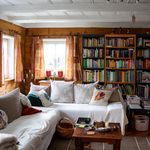
Paint is only one layer of a north facing room. Warm lighting does a great deal of quiet work: bulbs around 2700K, dimmable, and lamps placed at two or three heights rather than one overhead light. A pool of warm light at the level you actually sit — beside a chair, on a side table, over a bookshelf — makes more difference than any colour on the walls.
Then bring in texture. Wool throws, linen curtains, a faded rug, velvet cushions and aged wood all soften the cool cast of the light and give the room somewhere for the eye to rest. Matt emulsion on walls absorbs light gently, while a low-sheen eggshell on woodwork bounces a little back — a small trick that stops a north facing room feeling flat.
This is slow decorating, and it suits north light perfectly. Build the scheme over seasons, add a lamp when you find the right one, let the colours settle. A north facing room will never be bright in the obvious sense, but it can be warm, layered and deeply restful — which is usually what we were after in the first place.





John Doe
14 January, 2022Having no content in post should have adverse..
Chauffina Carr
10 April, 2022We use these tests all time! Killer stuff!
Jim Séchen
16 July, 2022Thanks for all the comments, everyone!