

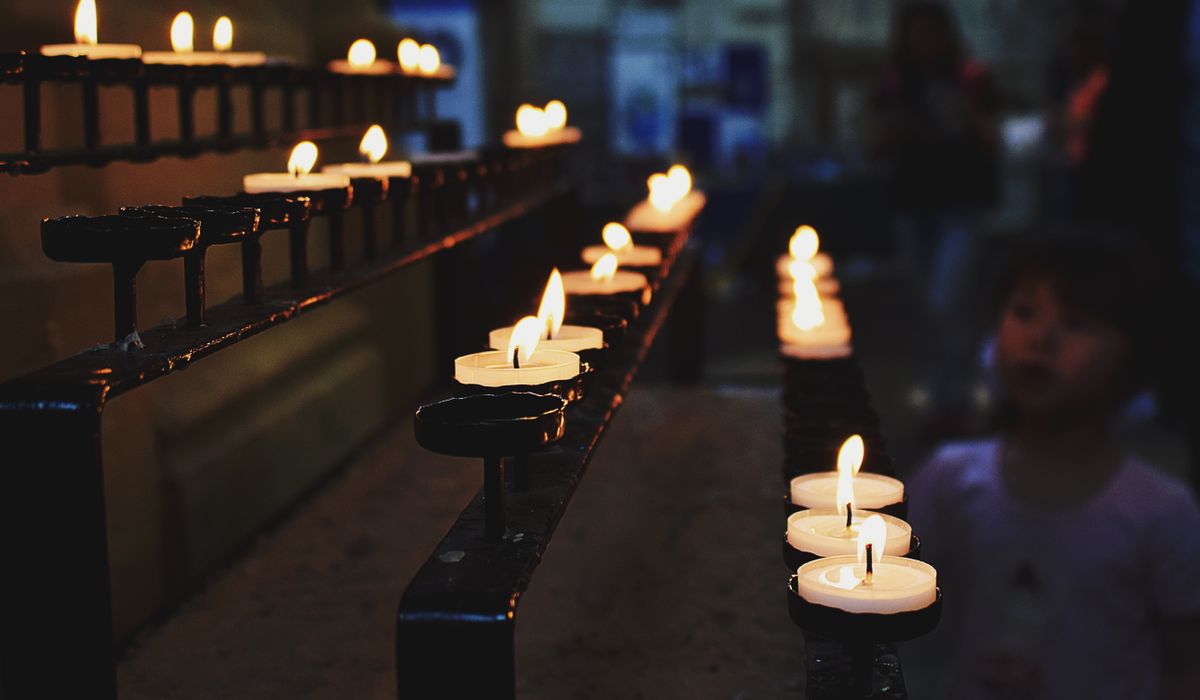
The quiet pleasure of a real flame
There is something an electric bulb can never quite imitate about candlelight. It is softer, slightly restless, and it changes the character of a room in a way no dimmer switch manages. In a vintage-inspired home — faded florals, old brass, a well-worn armchair — a few candles can turn an ordinary evening into a slow one. The candle asks something of you in return, though: a little attention. Almost every candle accident at home begins with a small, ordinary moment of carelessness, and nearly all of them are easy to avoid.
Begin with a well-trimmed wick
Trim the wick to around 5mm before lighting, every time, once the candle has cooled and the wax is firm. A proper pair of wick trimmers is the neatest tool, but sharp nail scissors work perfectly well. A wick left too long will curl, draw a taller flame, and produce sooty smoke that settles on walls, ceilings and lampshades — especially frustrating in a room you have decorated carefully.
Keep the wax pool clean as well. Stray match heads, flakes of charred wick and the little mushroom-shaped tip that forms after a few hours all act like a second wick, causing an uneven burn and a larger flame than the candle was designed for. Let the wax cool, then lift debris out with a tissue rather than digging at it with a knife. As a rule, burn a candle for no more than four hours at a stretch, then let it cool completely before trimming and relighting.
Give every candle a clear footprint
Placement matters more than most of us assume. Aim for at least 30cm of clear air around a flame, and further where soft furnishings are involved. That means a generous distance from curtains and netting, draped fabric, dried flowers and grasses, books, paperwork, wool throws and linen lampshades.
- Keep candles out of draughts. An open window, a doorway, an extractor fan or a radiator can make a flame lean and flicker, and a leaning flame reaches things a still one never would.
- Stand them on something stable and heat-resistant. Vintage brass and ceramic holders are ideal, but check for cracks and hairline splits; thin glass and painted metal can shatter or blister.
- Never set a candle directly on a wooden shelf, a windowsill, a television or the edge of a bath. Tea lights are particularly deceptive — the little metal cup becomes genuinely hot underneath, so sit it on a saucer or a heatproof dish.
- Space candles at least 10cm apart so they do not melt one another or create a shared, overheated pool of wax.
Candles, children and pets
If there are small children in the house, treat a lit candle as you would a hot pan: high, out of reach, and never on a low coffee table, floor or bath caddy where a curious hand can stretch towards it. Store matches and lighters well above head height, and use a long taper or extra-long match so you are never reaching over a flame with a sleeve.
Pets bring their own hazards. A wagging tail clears a coffee table in a single sweep, a cat will happily investigate a windowsill, and birds are especially sensitive to fumes and scent. Keep candles above the height of a jumping cat and away from the floor entirely. It is also worth knowing that some scented candles contain essential oils that are unpleasant or harmful to animals — citrus, eucalyptus, peppermint and tea tree among them. In a home shared with pets, an unscented or very lightly scented candle is the kinder choice.
Never leave a flame alone
This is the rule that overrides every other. Not for a quick trip to the kitchen, not to answer the door, not to take a phone call, not to check something upstairs. Snuff the flame first and relight it afterwards. Extinguish every candle before you leave the house, before you go to bed, and any time you feel drowsy.
A long soak with candles around the bath is one of the loveliest slow-living rituals there is, and also one of the most common places for accidents to happen. If you like candlelight while you bathe, keep the candles well away from towels and the water's edge, and never allow yourself to drift off. A glass of wine and an open flame are a combination worth avoiding too, however cosy the evening feels.
Light, enjoy, extinguish well
On the first burn, let the melt pool reach the edge of the candle before you put it out; this prevents the tunnelling that ruins so many good candles. When you are finished, use a snuffer or the back of a metal spoon rather than blowing, which spatters hot wax and sends a plume of smoke across your wallpaper. Never move a candle while it is lit, and store your spares somewhere cool and dark, away from direct sun.
Finally, a small habit that underpins all of this: test your smoke alarms regularly. Candlelight is one of the simplest pleasures in a slow, softly lit home — and with a trimmed wick, a sensible distance and a watchful eye, it stays that way.





John Doe
14 January, 2022Having no content in post should have adverse..
Chauffina Carr
10 April, 2022We use these tests all time! Killer stuff!
Jim Séchen
16 July, 2022Thanks for all the comments, everyone!