

Why the Evening Sets the Tone for Tomorrow
By the time most of us close the laptop or step through the front door, we are still running at full speed. The mind is churning through the to-do list, the eyes are still adjusting to the glare of a screen, and the body has not yet been told that the day is over. That gap between busy and restful is where slow living earns its keep. It is not about doing nothing; it is about deliberately turning the volume down so that your nervous system can catch up with your schedule.
Slower evenings are one of the most practical forms of self-care available to anyone with a living room, a lamp and half an hour to spare. They cost very little, they do not require an app, and they work with the grain of how the human body has always wound down: gradually, warmly and in low light.
Turn Down the Overhead Lights
Nothing says "it is still daytime" quite like a bright ceiling light blazing away at nine in the evening. Overhead lighting floods the room from above, casting harsh shadows and signalling to your brain that the day is still in full swing. Swap it for lamps placed at eye level or below, and the whole atmosphere of a room changes within seconds.
- Use two or three smaller lamps instead of one central fitting, so light comes from different directions and softens the edges of the room.
- Choose warm bulbs in the region of 2200K to 2700K, which give a golden, candle-like glow rather than a clinical white.
- Add a dimmer switch or a smart plug if the wiring allows, so you can ease the light down over the course of the evening rather than flipping it off all at once.
- Drape a scarf or a linen shade over a bare bulb to diffuse the glare, as long as it is well away from the heat source.
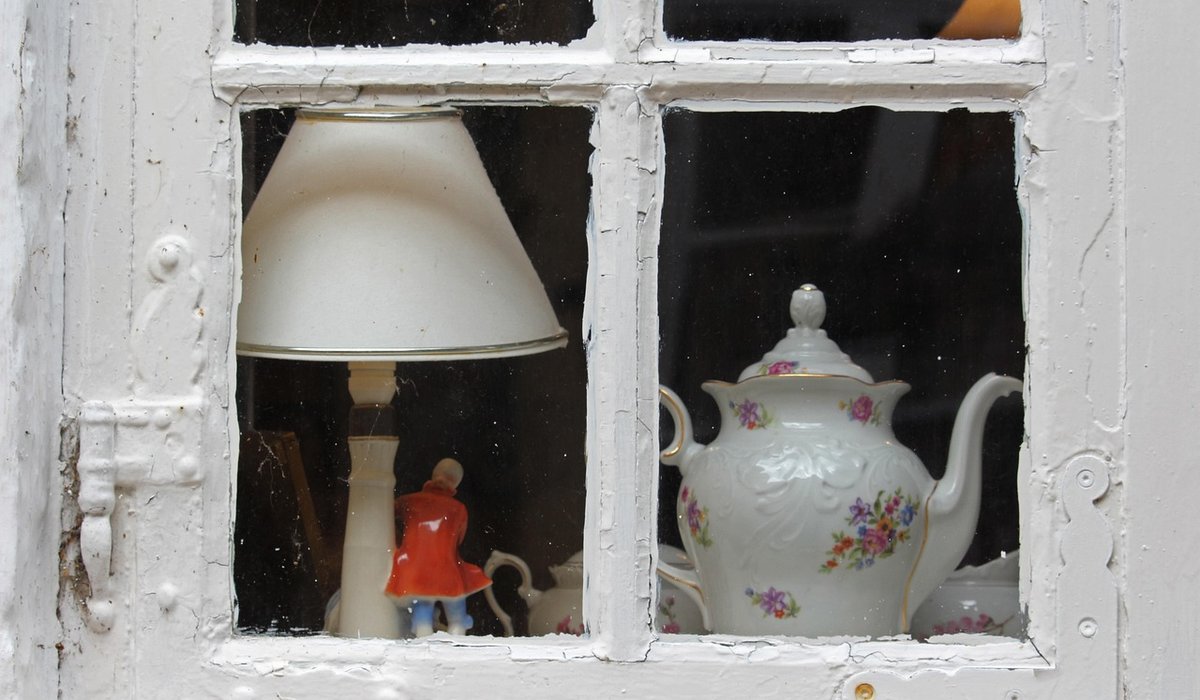
Vintage-inspired interiors lend themselves beautifully to this approach. A brass reading lamp, a battered enamel pendant hung low over a table, or a pair of mismatched glass lamps on a sideboard all create pools of light rather than a single flat wash. The result feels intimate, and intimacy is exactly what tells the body it is safe to relax.
Put the Screens Away, Gently
You have heard the advice a hundred times, so here is the practical version. The aim is not to ban screens from your evening but to stop them from being the last thing your eyes see before sleep. Blue light delays melatonin production, and even more importantly, the endless scroll keeps the mind in a state of low-level alertness.
Try setting a soft cut-off, perhaps an hour before you intend to go to bed. Put the phone on a shelf across the room, charge it in the kitchen, or simply turn it face down and leave it alone. If an hour feels ambitious, start with twenty minutes. The point is to create a small pocket of the evening where nothing is demanding your attention.
This is where a physical ritual helps. Make a cup of something warm, tidy the cushions, light a candle, open a book. Occupying your hands makes the absence of a screen far easier to bear than simply sitting and resisting the urge to check it.
The Warm Drink Ritual
A mug of tea, cocoa or warm milk with honey is not just a comfort; it is a signal. The warmth in your hands, the steam on your face and the slow, deliberate act of drinking all combine to slow your breathing and settle your heart rate.
- Choose caffeine-free options after around six in the evening: chamomile, peppermint, rooibos or a milky drink.
- Use a proper cup rather than a takeaway mug. A china cup and saucer, or a chunky stoneware mug, makes the moment feel like an occasion.
- Drink it sitting down, away from the kitchen counter, with the lamps on and the main light off.
- Keep it slow. The drink is not a task to complete; it is a small ceremony that marks the end of the working day.
If you live with others, this is a lovely moment to share. A pot of tea and twenty minutes of unhurried conversation does more for a household than any amount of television in the background.
Create a Corner That Invites You to Stay
Slow evenings are easier to keep when the room is set up for them. A comfortable chair, a side table within reach, a blanket folded nearby and a lamp angled over your shoulder will do more than any amount of willpower. Vintage furniture is often ideal here, because it was designed for sitting rather than for showing off: deep armchairs, wing backs and footstools that encourage you to put your feet up.
Add texture where you can. Wool, linen, velvet and aged wood all absorb sound and soften a room, which is why older interiors so often feel calmer than modern, hard-edged ones. A rug underfoot, a curtain drawn across the window and a shelf of well-thumbed books complete the picture.
Let the Body Take the Lead
The beauty of a slow evening is that it asks nothing complicated of you. Dim the lights, put the phone out of reach, make a warm drink and sit somewhere comfortable. Do this consistently and the body learns the sequence: dark, warm, quiet, safe. Sleep arrives more easily, and the following morning feels less like a scramble.
Start with one change this week. Perhaps it is lighting a single lamp instead of the overhead, or leaving your phone in another room while you drink your tea. Small, repeatable habits are the ones that last, and an evening that ends gently is one of the kindest things you can give yourself.




John Doe
14 January, 2022Having no content in post should have adverse..
Chauffina Carr
10 April, 2022We use these tests all time! Killer stuff!
Jim Séchen
16 July, 2022Thanks for all the comments, everyone!