

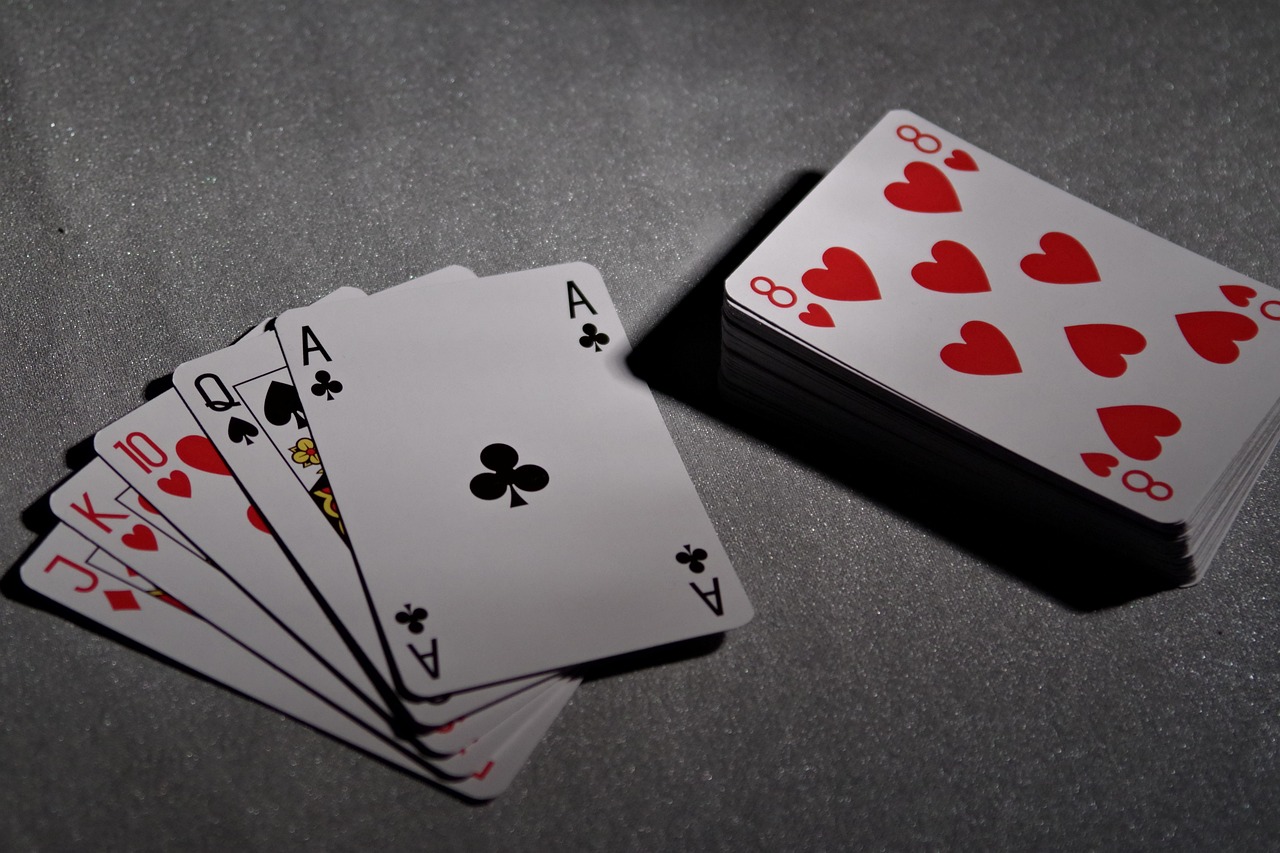
You sit down at a glowing slot machine, hit spin, and watch the reels blur. Three cherries line up—but nothing pays. The next spin, you lose again. Frustrating? Sure. But here’s the thing: that machine isn’t cheating you. It’s just doing exactly what it was programmed to do. And if you understand the math behind it, you’ll play smarter, not harder.
Most casual players never look past the flashing lights and catchy sounds. They think slots are pure luck, or worse, that a machine is "due" for a jackpot. That’s exactly the mindset that drains your wallet. This article breaks down the real numbers—RTP, volatility, house edge—in plain English. No fluff, no get-rich-quick nonsense. Just the facts you need before you drop another coin.
The Only Number Casinos Don't Want You to Ignore
Every slot machine has an RTP: Return to Player. It’s a percentage that tells you how much of all money wagered on that machine gets paid back to players over millions of spins. A 96% RTP means the casino keeps 4%—that’s the house edge. Simple, right?
But here’s where players get confused. That 4% doesn’t mean you’ll lose 4% per session. It’s a long-term average. In a single session, you could lose everything or hit a jackpot. Over a year, though, the math always wins for the house. A machine with 92% RTP is far worse than one with 97%. Always check the RTP before you play—it’s often buried in the help menu. In many jurisdictions, casinos are required to display it; in others, you have to dig.
Take two popular online slots: Book of Dead (RTP around 96.2%) and Starburst (RTP 96.1%). Compare those to some penny slots in Las Vegas with RTPs as low as 85%. That difference is massive. On a $100 bankroll, an 85% RTP machine will theoretically eat $15, while a 96% machine keeps only $4. Over hours of play, that gap destroys your balance.
Volatility: The Rollercoaster You Can't See
RTP tells you the average payback. Volatility (or variance) tells you how those payouts are distributed. High volatility slots pay rarely but can hit huge. Low volatility slots pay often but small. Neither is "better"—it depends on your bankroll and how you like to play. There is a useful overview at สล็อตเว็บตรง.
- Low volatility: Frequent small wins. Think classic 3-reel slots. Good for slow grinding, but you won’t get rich.
- Medium volatility: A balanced mix. Popular in games like Gonzo’s Quest.
- High volatility: Long dry spells, then massive multipliers. Book of Dead is a classic example. You might spin 200 times with nothing, then hit a 5000x win.
If you have a $50 bankroll and play a high-volatility slot at $2 per spin, you’ll likely bust before the big win comes. Low volatility is safer for small budgets. High volatility is for those who can stomach the swings and have a bigger cushion. Know thyself.
Betting Systems: The Myth That Won't Die
Walk into any casino and you’ll hear about the Martingale system: double your bet after every loss. The idea is that when you finally win, you recover everything plus a small profit. Sounds foolproof? It’s not. Here’s why.
Imagine a $5 bet on roulette (even money). Lose, bet $10. Lose, bet $20. Lose, bet $40. Lose, bet $80. Lose, bet $160. Now you’re $315 in the hole just to win $5. And casinos have table limits—usually $500 or $1000. So after a handful of losses, you can’t double anymore. Plus, your bankroll isn’t infinite. One bad streak wipes you out.
Mathematically, no betting system changes the house edge. The odds of each spin or hand are independent. The only thing systems do is change the distribution of wins and losses—and usually for the worse. The same applies to sports betting "locks" or poker "guaranteed" strategies. If someone had a sure thing, they wouldn’t sell it for $49.99.
Poker: The One Game Where Skill Actually Beats Luck
Unlike slots or roulette, poker is a game of decisions, not chance. Over the long run, the better player wins. But "long run" can mean thousands of hands. In a single session, anyone can suck out on you with a 2-outer on the river.
Here’s a concrete example. You hold A-K suited. Your opponent has 7-2 offsuit. Preflop, you’re about 65% to win. That’s a huge edge. But 35% of the time, they win. If you play that hand 100 times, you’ll profit. Play it once, and you might lose. That’s variance.
Professional poker players focus on expected value (EV), not results. They make the mathematically correct play, and let the chips fall. If you want to improve, stop chasing losses and start thinking in terms of ranges, pot odds, and position. Books like The Theory of Poker by David Sklansky are still gold. And for online play, tracking software like Holdem Manager can show you leaks in your game.
Practical Tips for Smarter iGaming
Whether you love slots, sports betting, or poker, a few habits separate winners from donors.
- Set a loss limit before you play. Decide how much you’re willing to lose, and stick to it. No exceptions.
- Check the RTP and volatility. For slots, aim for 96% or higher. For blackjack, look for 3:2 payouts (not 6:5).
- Never chase losses. The machine doesn’t know you’re down. Each spin is independent.
- Use bonuses wisely. A 100% match bonus sounds great, but read the wagering requirements. 40x on slots is common—that means you must bet $4,000 to withdraw $100.
- Track your play. A simple spreadsheet of wins, losses, and hours played will open your eyes.
Also, remember that online casinos use random number generators (RNGs) that are tested by independent labs like eCOGRA. A machine that hasn’t paid out in hours is not "due." That’s the gambler’s fallacy. The odds are the same on every spin.
The Bottom Line: Entertainment, Not Income
iGaming is a billion-dollar industry because the math is stacked in the house’s favor. That doesn’t mean you can’t enjoy it. It means you should treat it as entertainment, not an investment. The thrill of a bonus round or a well-timed bluff is real. But the moment you start thinking you can beat the system, you’ve already lost.
So next time you fire up a slot or sit at a poker table, do it with clear eyes. Know the RTP, respect the variance, and never bet more than you can afford to lose. That’s not just good advice—it’s the only way to play without regret. The house always wins in the end, but you can still walk away a winner if you define winning on your own terms.






John Doe
14 January, 2022Having no content in post should have adverse..
Chauffina Carr
10 April, 2022We use these tests all time! Killer stuff!
Jim Séchen
16 July, 2022Thanks for all the comments, everyone!